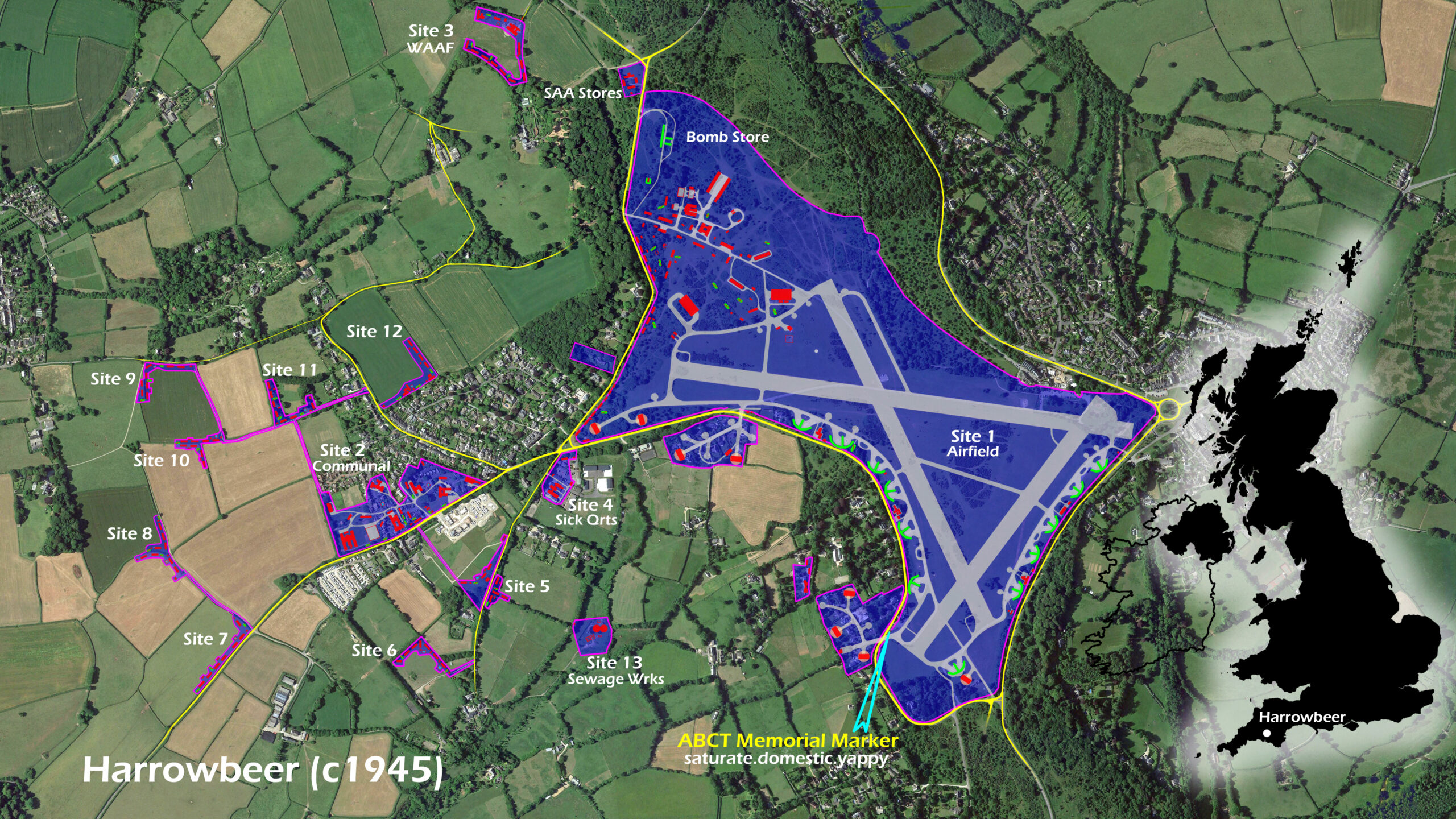

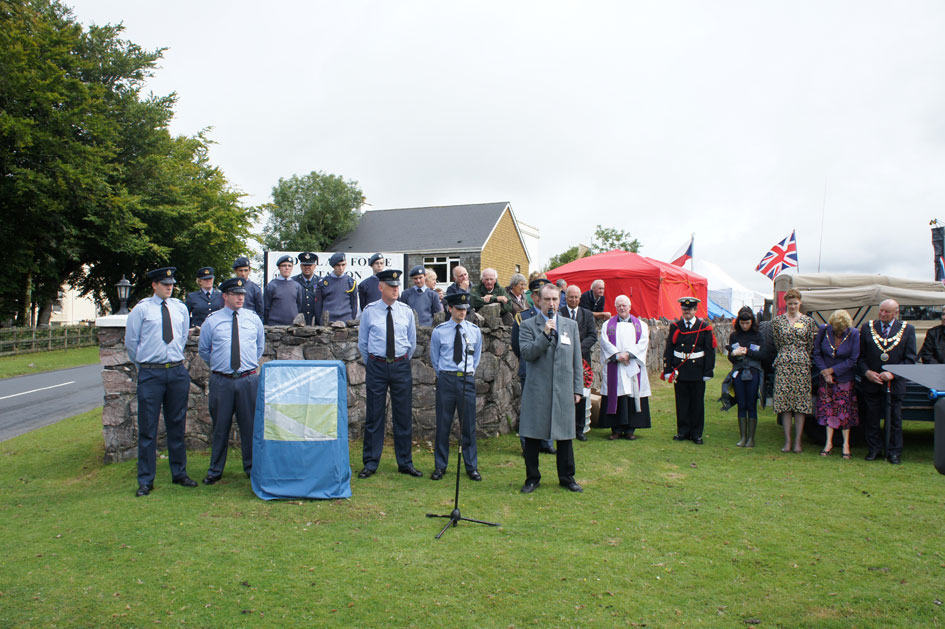
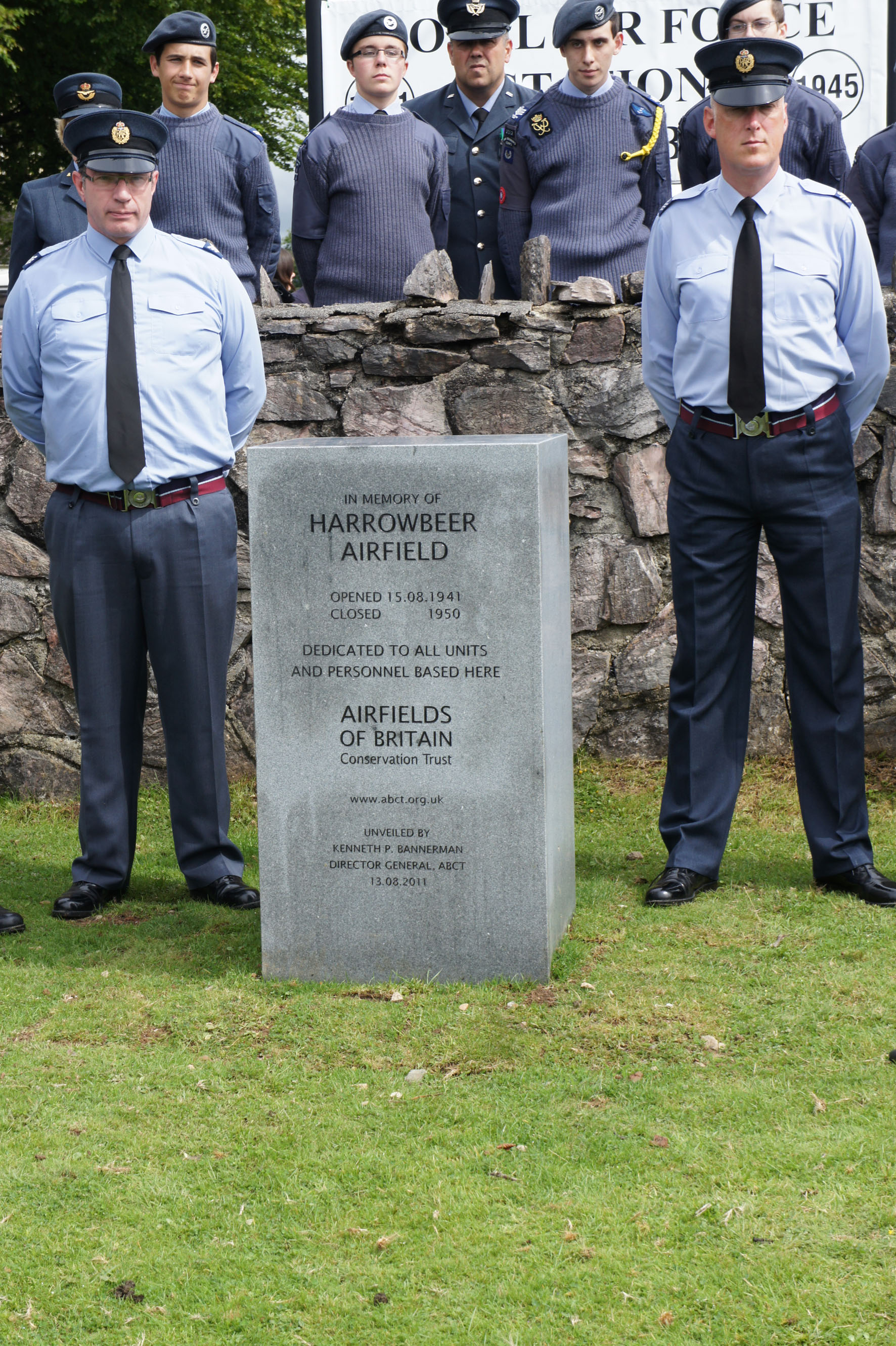
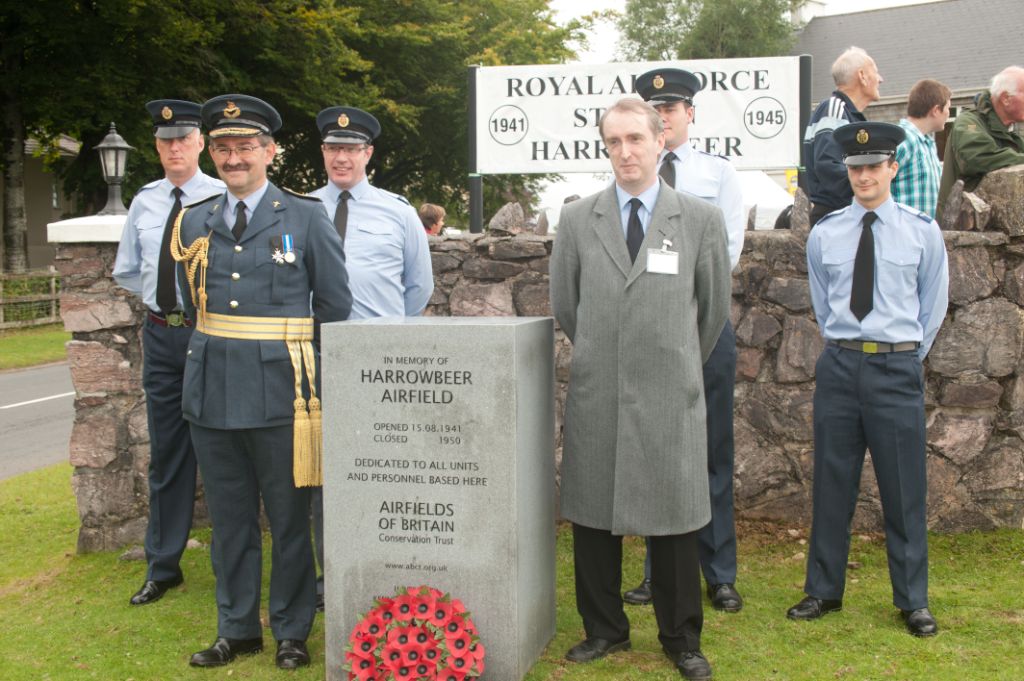
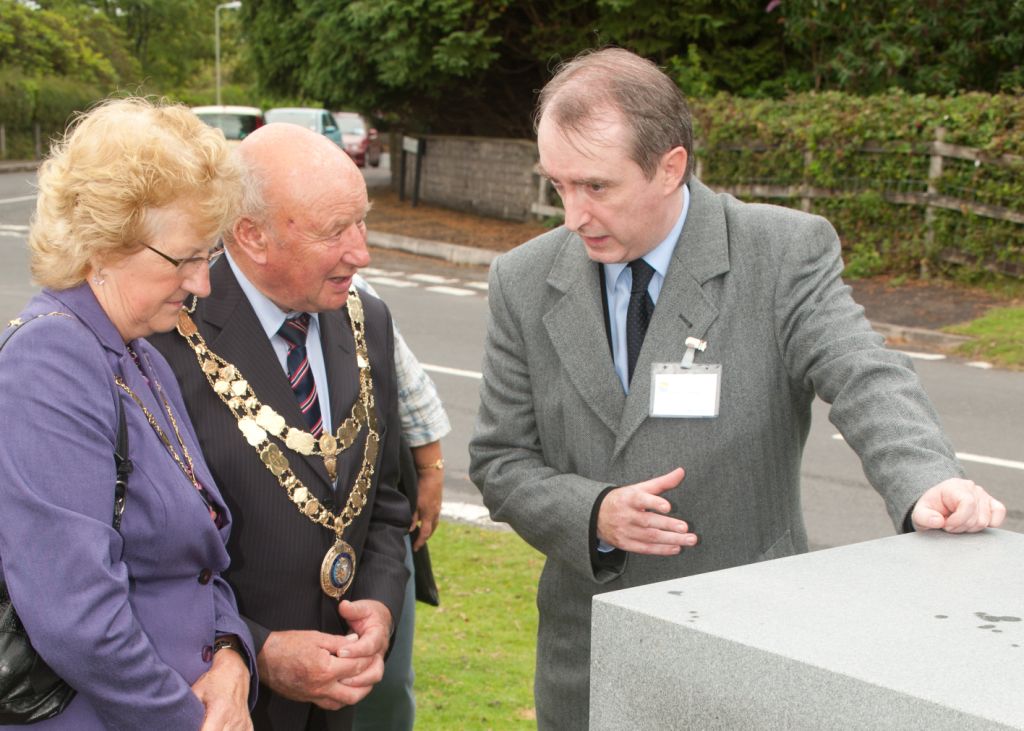
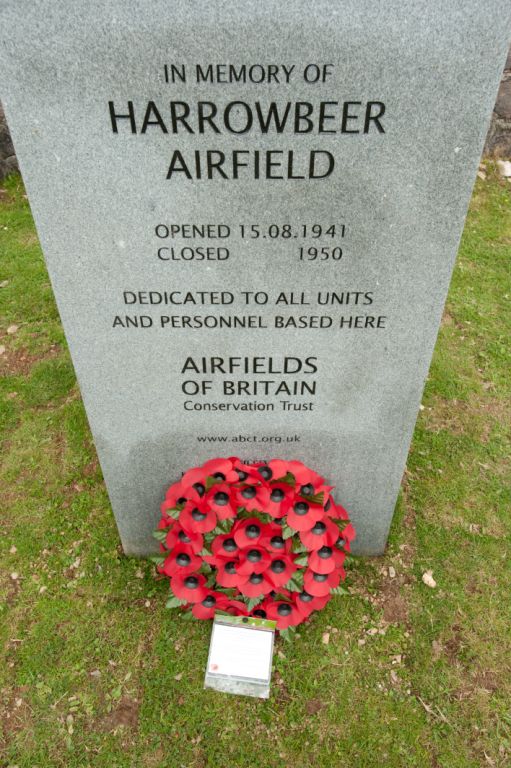
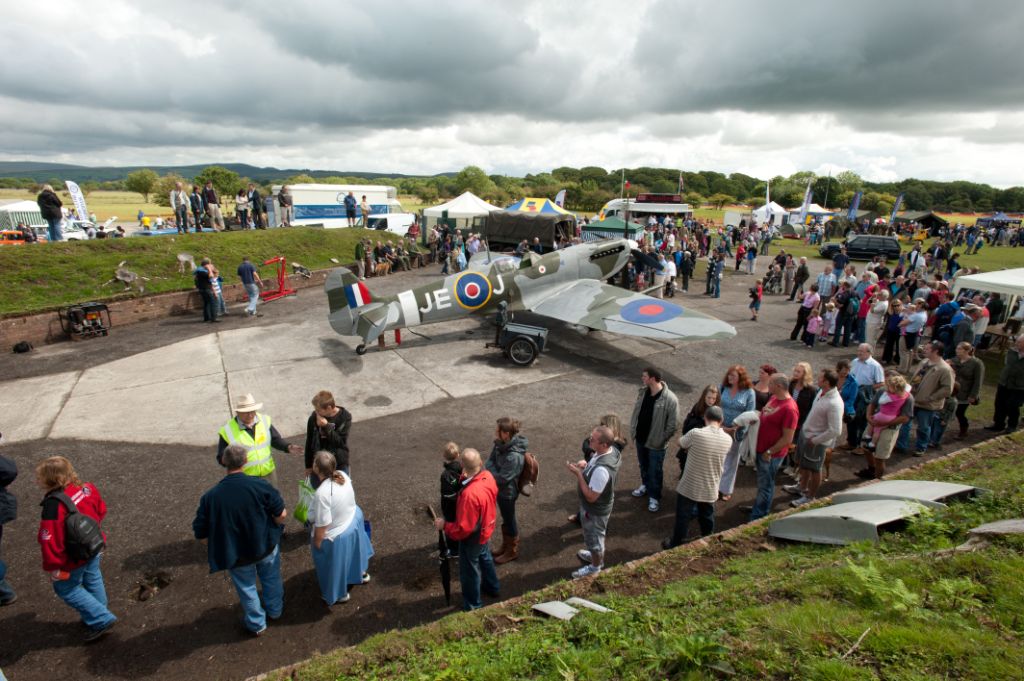
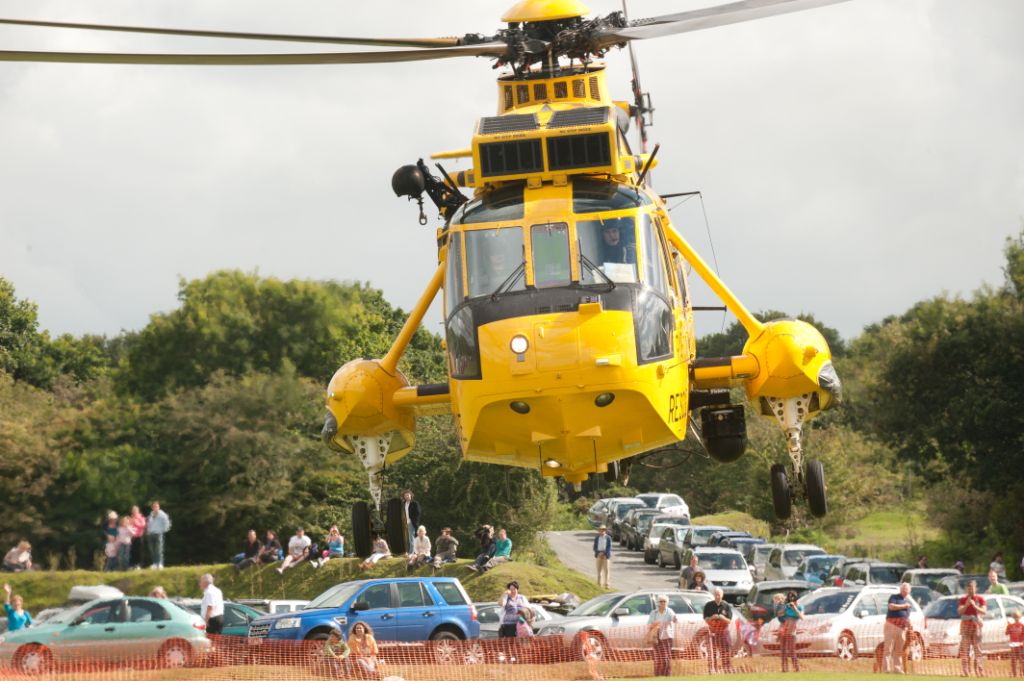
Photographs from the unveiling of the ABCT marker on 13 August 2011:
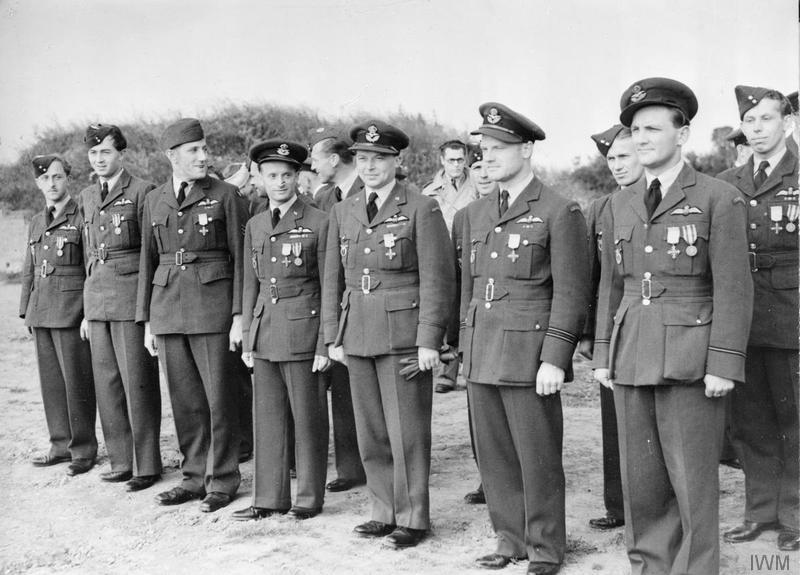
Pilots of No 312 (Czech) Squadron RAF lined up after being decorated by Dr Eduard Bene, the Czech President in exile, at Harrowbeer. © IWM (D 10206)
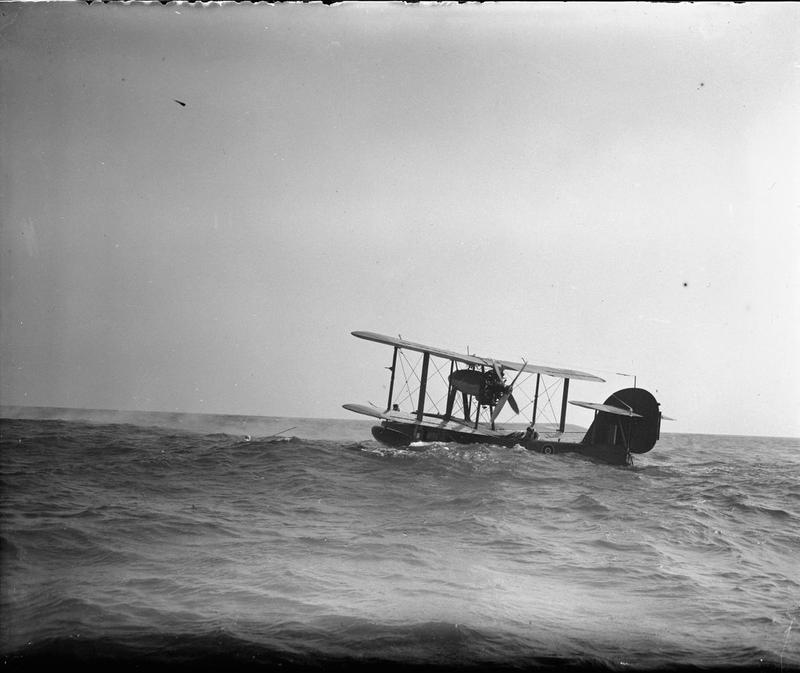
A Supermarine Walrus of No 276 Squadron based at Harrowbeer, taxying toward a pilot in the water during an air/sea rescue exercise in the English Channel. © IWM (CH 9027)
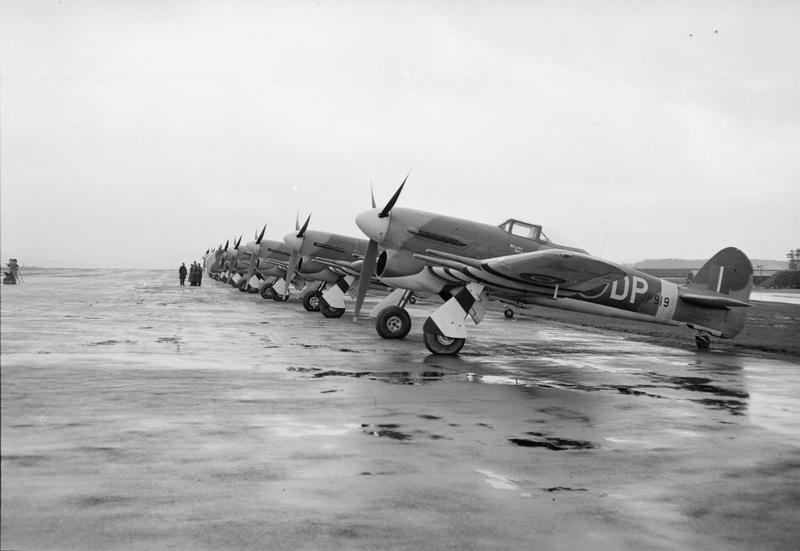
Nine Hawker Typhoons presented to the RAF by the Brazilian "Fellowship of the Bellows" and officially handed over to No 193 Squadron by the Brazilian Ambassador, Dr J J Moriz de Aragao at Harrowbeer. © IWM (CH 11393)
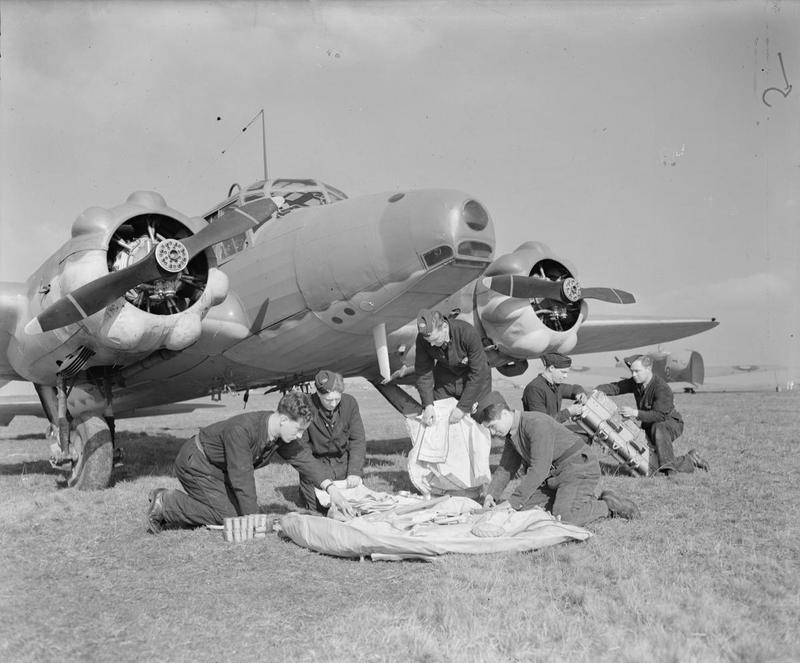
Ground crew packing a dinghy and its supplies for installation in an Avro Anson Mark I, air-sea rescue aircraft, of No. 276 Squadron RAF at Harrowbeer. © IWM (CH 9021)
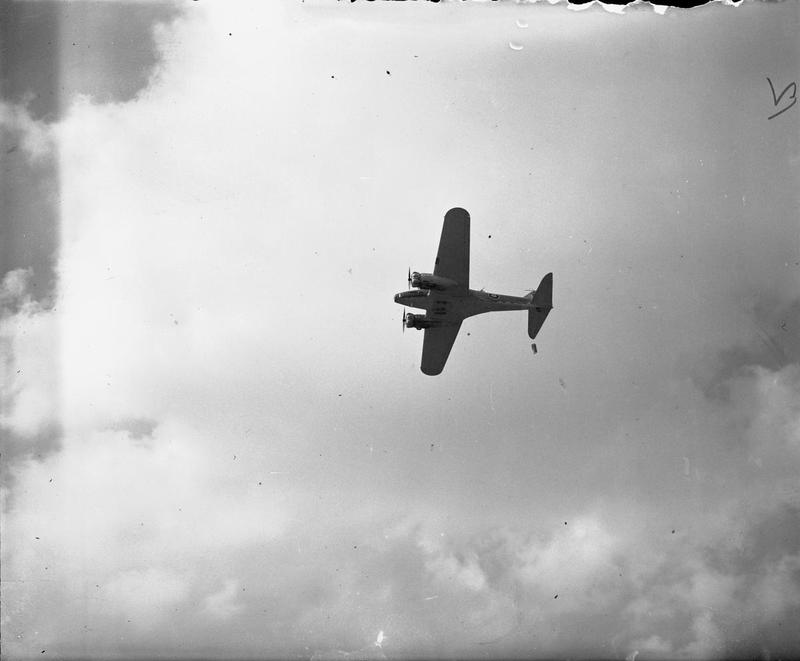
An Avro Anson Mark I, air-sea rescue aircraft of No 276 Squadron RAF, based at Harrowbeer, Devon, dropping a dinghy container over the English Channel. © IWM (CH 9025)
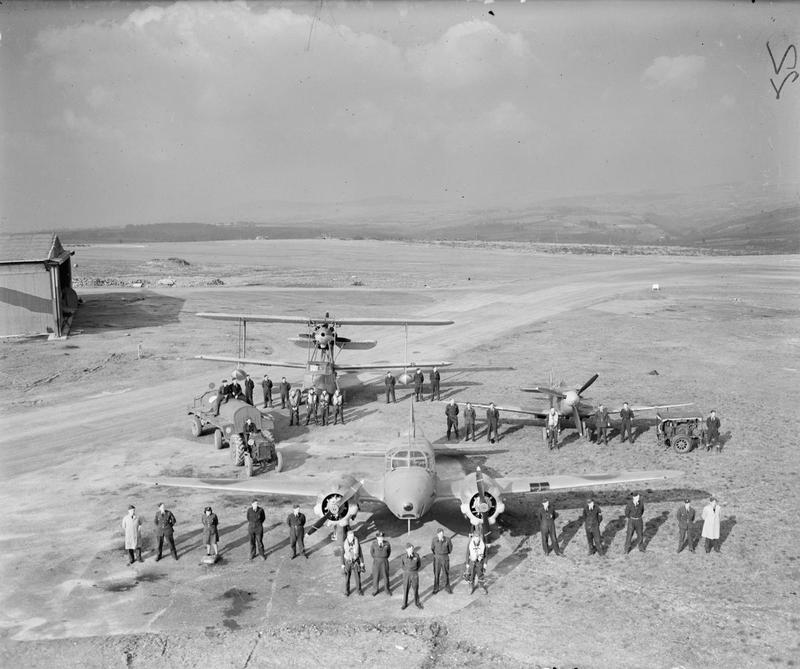
Personnel and aircraft of No 276 Squadron RAF assembled at Harrowbeer. The aircraft are an Avro Anson, a Supermarine Spitfire and a Supermarine Walrus. © IWM (CH 9017)
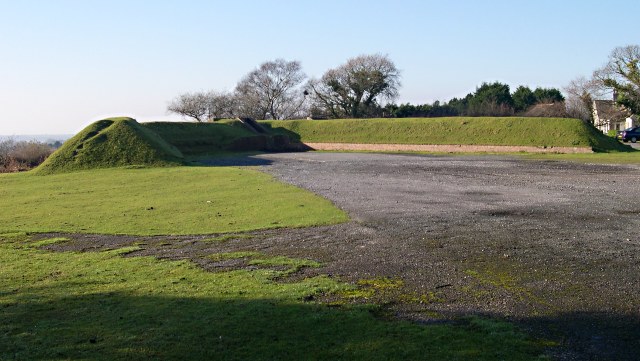
A dispersal bay at Harrowbeer, 11 December 2005. © Tony Atkin and licensed for reuse under this Creative Commons Licence
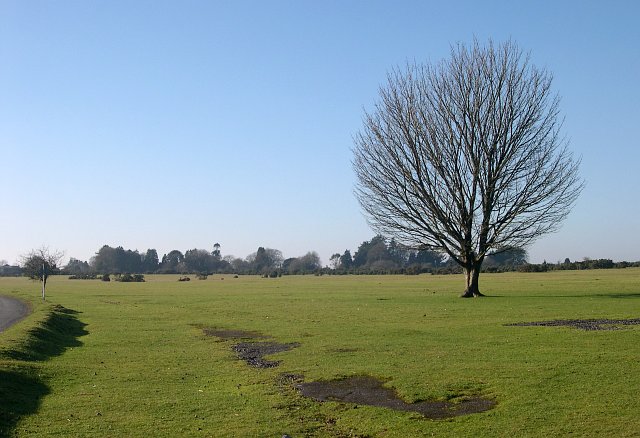
View looking across the former airfield at Harrowbeer, 11 December 2005. © Tony Atkin and licensed for reuse under this Creative Commons Licence
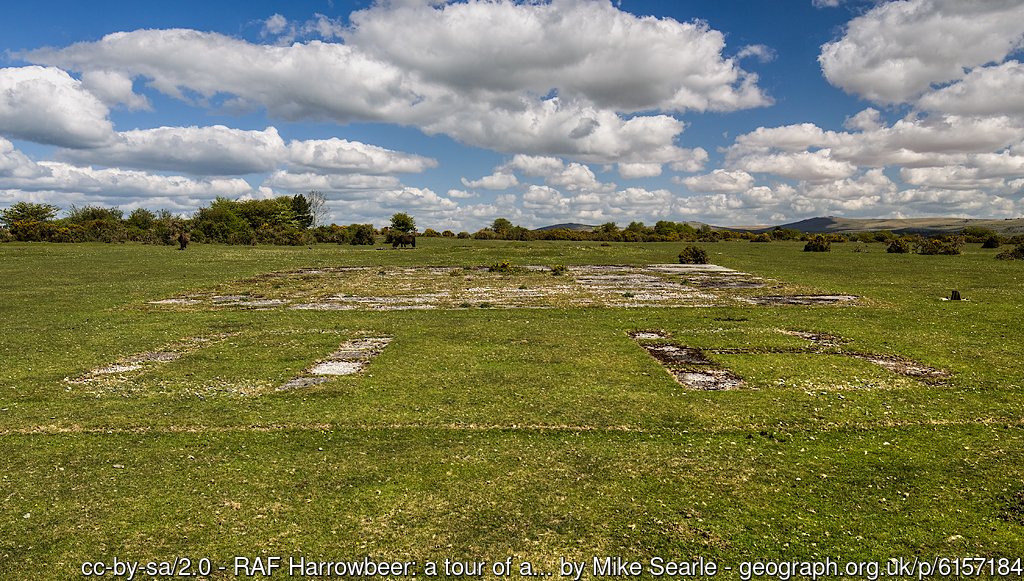
The Signal Square at Harrowbeer, 5 May 2019.